Guides
Language
EnglishCurrency
US dollar · $Your currency applies on GetYourGuide too.
Guide · Care programs
Elephant care in Chiang Mai: a day learning the keeper's work
Elephant care in Chiang Mai usually means a few hours of preparing food, feeding and washing alongside the keepers. Here is what the programs list, and the questions worth asking.
Editorial team, elephanttourchiangmai.comUpdated October 26, 20266-minute read17 sources
Quick answer on care days
- 01What you do
- Prepare food and treats, feed, then a mud and sand spa with the herd.
- 02How long
- 4 to 5 hours, with a 1-hour drive to Mae Taeng each way.
- 03Price
- From $54, hotel pickup in central Chiang Mai included.
- 04Private option
- An 8-hour day for couples with a private car, from $358.
- 05Worth knowing
- World Animal Protection counts care-taking among close-contact activities.
What a care program means near Chiang Mai
Elephant care in Chiang Mai is sold under many names: care program, keeper experience, mahout for a day. The common thread is that you do more than hand over a banana. World Animal Protection describes care-taking as a fuller experience that introduces visitors to the spoken commands keepers use, usually together with preparing food and washing the elephants.1
The Tourism Authority of Thailand has described a similar format at Patara Elephant Farm, called Elephant Owner for a Day: learning how to approach an elephant correctly, reading its temperament, feeding it, checking its health, bathing it and talking to it with spoken commands.2 Other camps around the city sell shorter versions of the same idea, often as a morning or a half day.
Care days now make up a large part of the market. World Animal Protection found that in 2024/25 half of all the elephants it assessed, 54%, lived at venues offering either washing or care-taking.3 Care-taking on its own was offered with 11% of them.4 The format is popular, then, but far from universal.
The day in order
How the Mae Taeng care program runs
-
Morning
Hotel pickup
Collected in central Chiang Mai, then a 1-hour ride to Mae Taeng.
-
On arrival
Change and briefing
Local clothes on, then a talk on elephant behavior and care.
-
Next
Food and treats
Prepare the food, then feed it to the elephants.
-
Later
Mud and sand spa
Watch the herd in the mud, or join in.
-
Last
Shower and lunch
Clean up, then a Thai buffet that suits vegetarians.
The Mae Taeng program, step by step
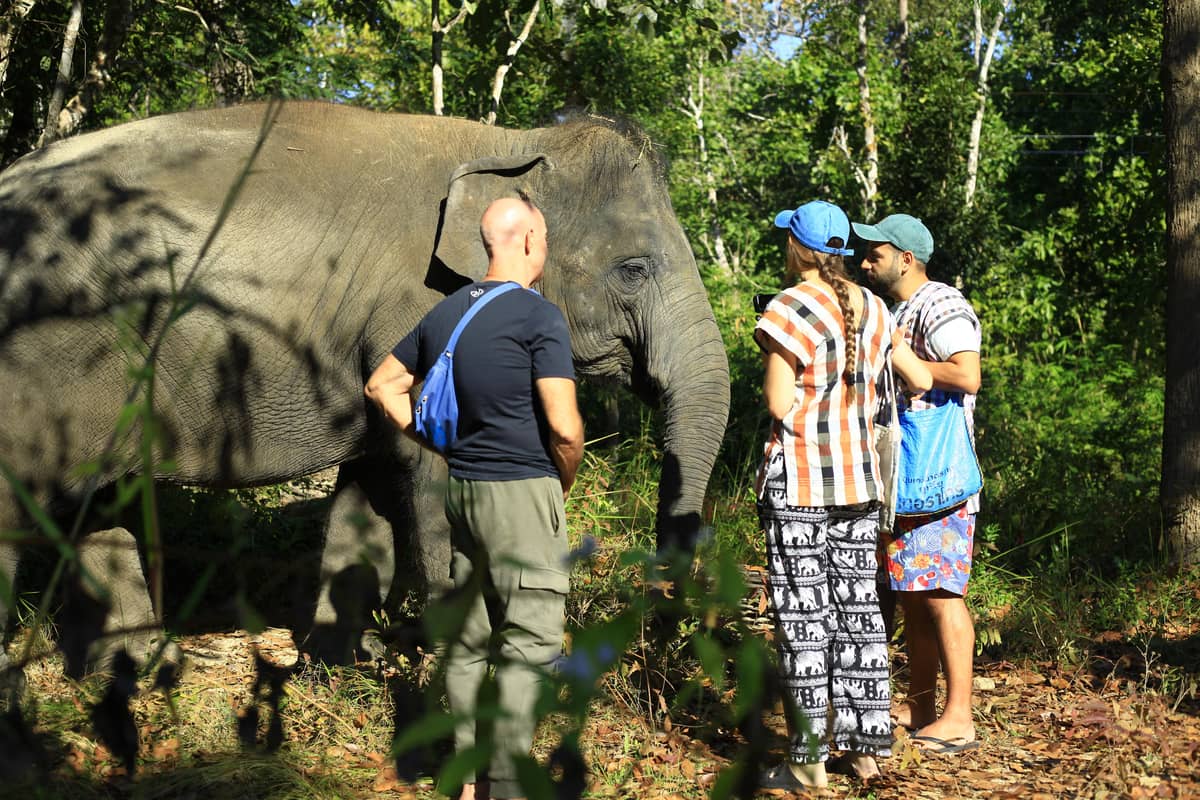
The care program recommended on this page starts with a hotel pickup in central Chiang Mai and a 1-hour ride north to the Mae Taeng district. On arrival you change into local clothes, which saves your own from the mud, and listen to a talk on how the elephants behave and how they are looked after.
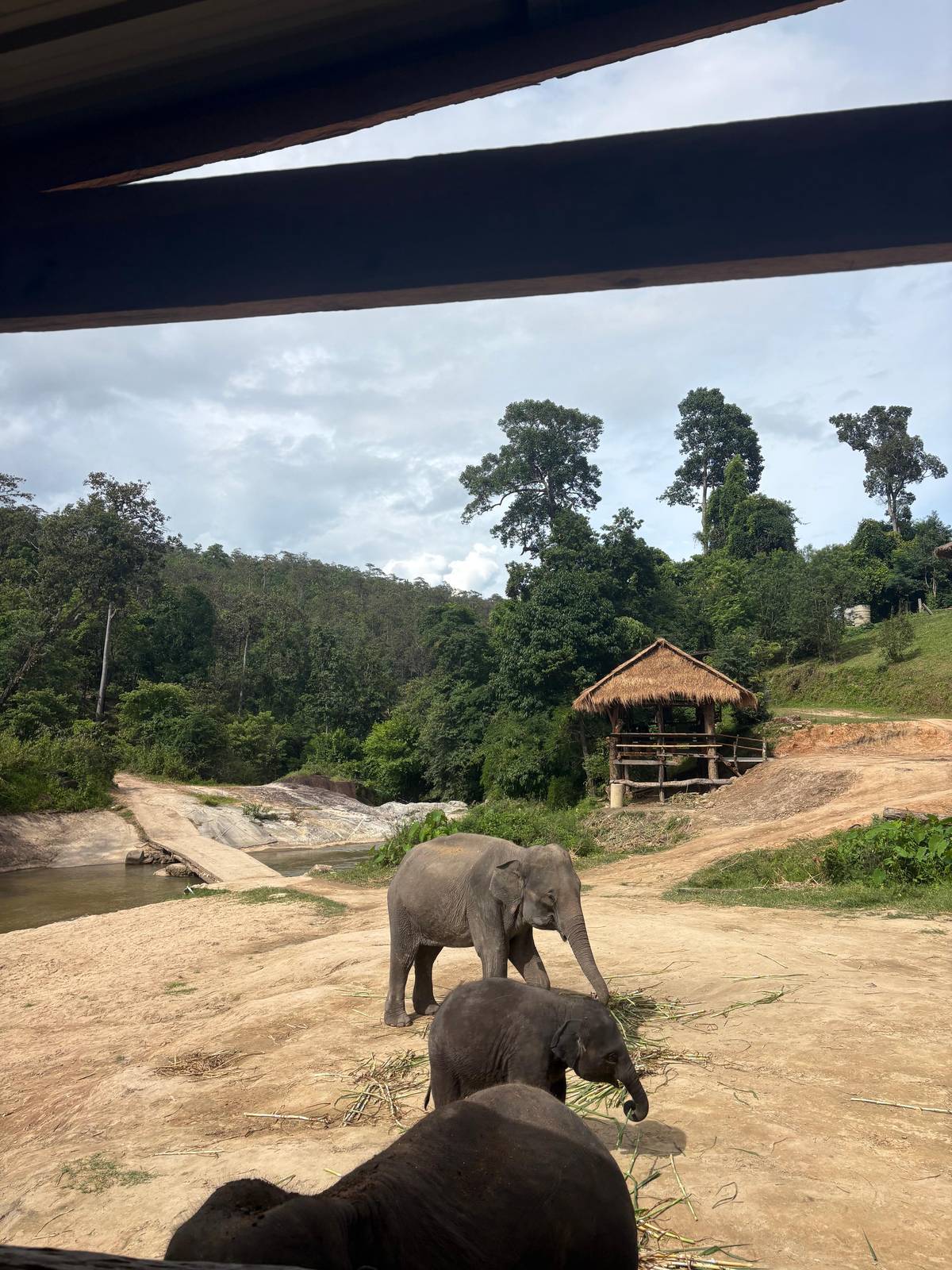
Then the work begins: preparing food and treats and feeding them to the elephants, followed by a mud and sand spa where you watch or join the herd. Afterwards there is time to shower and change before a Thai buffet lunch that suits vegetarians. The title also promises a nursery, and the listing mentions baby elephants.
The whole program takes 4 to 5 hours, the guide speaks English, and it starts from $54. Its 1,935 reviews average 4.83; reviewers score the guide and the transport 4.8 each and the value 4.7. The local operator confirms the pickup time again after you book, so keep your phone or email handy the evening before. Be ready in your hotel lobby a little early on the day.
Across Thailand
Share of elephants at venues offering each activity
Keeper-style days
Care programs and their close cousins
| Listing | Hours | Hands-on part | Price |
|---|---|---|---|
| Mae Taeng care program | 4 to 5 | Food prep, feeding, mud spa | from $54 |
| Feeding half day, Mae Wang | 5 to 5.5 | Herbal treats, feeding, river bath | from $26 |
| Lanna Kingdom small group | 5 to 8.5 | Vitamin balls, mud bath, river bath | from $72 |
| Private couples' day | 8 | Treats, cooking lunch, bath, mud scrub | from $358 |
Rows restate each listing; starting prices change with date and option.
Decision helper
Is a care day the right pick?
Match your reason for going to the format.
Food prep, a talk on care and the mud spa make it the most practical format.
It includes herbal treats and feeding and starts from $26.
8 hours with a private car and a Thai lunch you cook yourself.
Capped at 10 people, with vitamin balls to make.
World Animal Protection counts care-taking among close-contact activities.4
these activities are often called ‘be a mahout’ and tend to offer a more comprehensive experience with the elephants, introducing the visitor to verbal commands that mahouts use to control and manage the elephant.
Other keeper-style days around the city
Feeding mornings borrow parts of the format. The half day this site recommends, at Pon Elephant Thailand in Mae Wang, includes preparing herbal treats along with feeding, a nature walk and a river bath. Expect 5 to 5.5 hours in total, at a starting price of $26.
A small-group day at the Lanna Kingdom Elephant Sanctuary, limited to 10 people, has visitors roll herbal vitamin balls to feed the elephants, then adds a mud bath and a river bath. It starts from $72 and runs 5 to 8.5 hours from Wat Phra Singh.
For couples there is a private 8-hour version with a private car from your hotel, preparing treats, feeding fruit and sugar cane, cooking your own Thai lunch, then bathing the elephants and a mud scrub. It starts from $358 and has 25 reviews. Bring a swimsuit, flip flops and sun protection, as its listing asks.
Map
Meeting points in town and the valleys the vans drive to
First the old city, where several tours collect you, then the districts north and south-west of Chiang Mai where the camps sit.
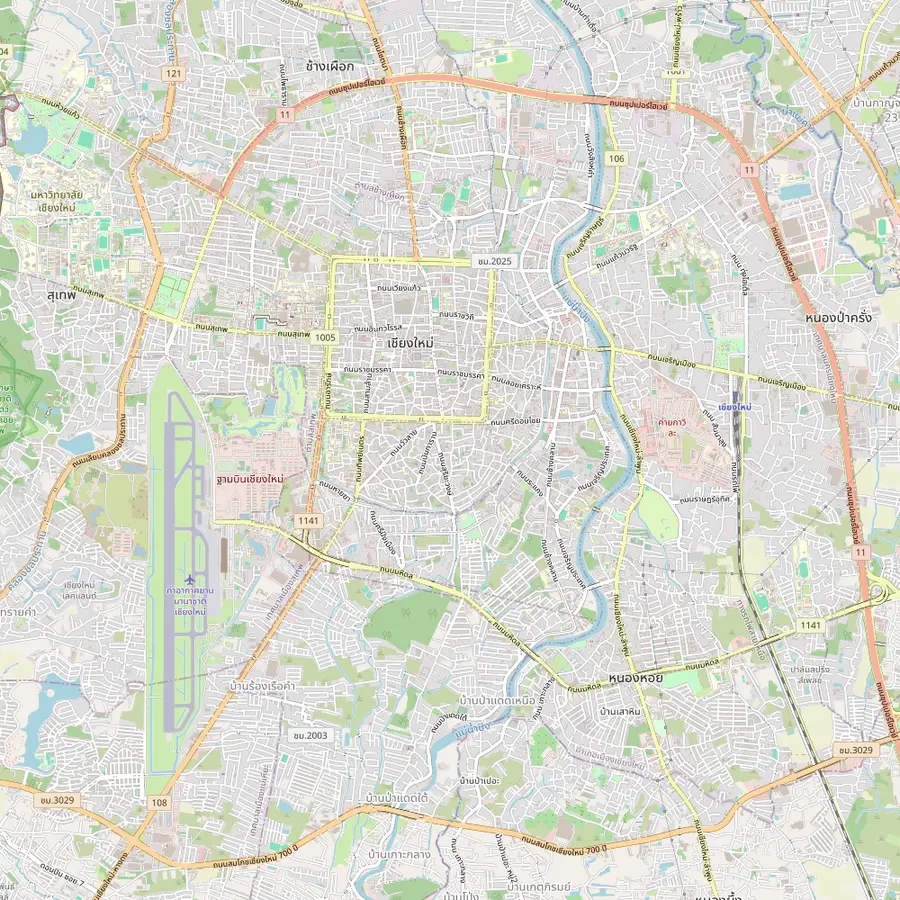 1Tha Phae Gate2Wat Phra Singh3Three Kings Monument4Chiang Mai railway station5Chiang Mai International Airport
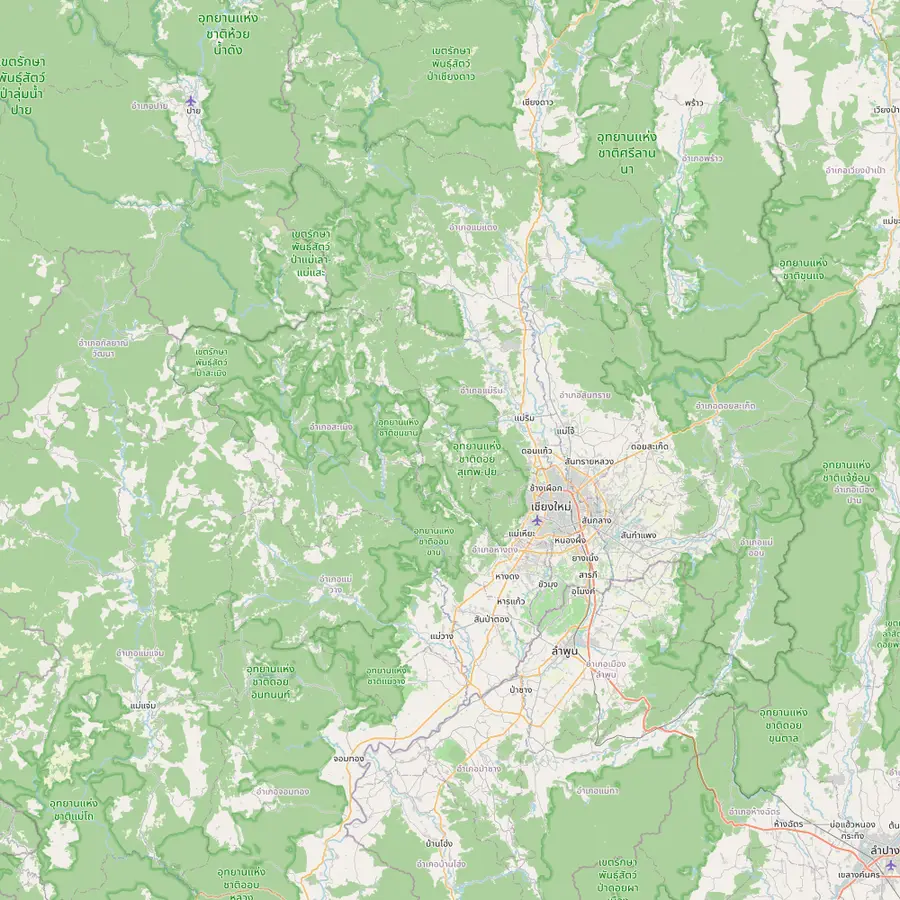 6Chiang Mai7Mae Rim8Mae Taeng9Mae Wang10Mae Win
- 1Tha Phae Gate
An old gate from the days when Chiang Mai was the Lanna capital, part of the wall around the Old City.5
In Google Maps ↗ - 2Wat Phra Singh
The temple entrance is the meeting point for one small-group sanctuary day, with collection between 8 and 8:30 AM.
In Google Maps ↗ - 3Three Kings Monument
Meeting point of a Viator day that pairs the Bua Tong waterfall with a sanctuary in the Mae Taeng valley.
In Google Maps ↗ - 4Chiang Mai railway station
The train from Bangkok ends here; on the way it passes the Khun Tan tunnel, over 1.3 km long.6
In Google Maps ↗ - 5Chiang Mai International Airport
The city airport, a short ride from the old town.
In Google Maps ↗ - 6Chiang Mai
Start of the site tour: pickup from a meeting point in the city, or you make your own way to the park.
In Google Maps ↗ - 7Mae Rim
The district between the city and Mae Taeng, on the road north.
In Google Maps ↗ - 8Mae Taeng
A care program drives 1 hour from central Chiang Mai to this district.
In Google Maps ↗ - 9Mae Wang
Pon Elephant Thailand, about 1.5 hours by road south of the city, home of the site tour and of a 2-day homestay.
In Google Maps ↗ - 10Mae Win
A subdistrict of Mae Wang in the hills further west.
In Google Maps ↗
Checklist
Pack for a care day
Clothes
- A full change of clothes and underwear
- A towel and a bag for wet things
- Shoes that can get muddy
Comfort and safety
- Sunscreen, a hat and water
- Waterproof plasters for small cuts
- Small notes if you want to tip
Cost calculator
What a care day costs your group
Choose a program and the number of people.
Total from$108
per head from $54
Check availabilityfree cancellationPer-person starting prices from the listings, turned into your currency at the ECB reference rate; the booking page shows the final sum.
Video
A volunteer week caring for elephants near Chiang Mai
Until you tap play, the video stays unloaded.
What welfare groups say about care-taking
Care programs are often marketed as the kind alternative to riding. World Animal Protection does not see it that way. It lists care-taking with washing and hand feeding as close-contact activities, and it writes that genuine sanctuaries do not offer rides, be-a-mahout activities or shows.47
Its reasoning centers on how elephants are trained to accept people up close. The charity says that using elephants for tourist interactions, rides or shows requires cruel training.8 It also warns that captive elephants can be unpredictable and dangerous, especially when crowded, and that tourists and keepers are hurt and killed each year.9
The Tourism Authority of Thailand puts the emphasis elsewhere. It stresses that elephants in Thailand's camps are captive, not wild, and need human care to survive.10 Both views are worth weighing before you book. If you want hands-on contact, a care day delivers it; if the welfare argument persuades you, a watching day is the alternative our tour types page describes.
The keepers behind the program
Every care day depends on the mahouts, the keepers who spend their working lives with one elephant or a few. In 2017 World Animal Protection and Chiang Mai University's Department of Sociology and Anthropology interviewed 200 of them.11 The study found the work carries serious health risks, leaves families economically vulnerable and has shifted from a skilled, respected role to laboring work.12
Many of the keepers interviewed loved the elephants and their jobs, yet very few wanted their children to follow them into it.13 That is worth remembering when a keeper shows you how to call an elephant over or check its feet: you are watching a craft passed down in families that is under real pressure.
Treat the keepers as the experts they are. Ask questions about the individual elephants, their histories and their routines; follow instructions straight away, especially near the river or the mud pool; and if you want to tip, carry small notes. A good care day is as much about the people as about the animals. If something you are asked to do makes you uneasy, say so politely and step back; no keeper will mind a visitor who prefers to watch for a while.
Volunteering for longer than a day
Some travelers want more than a few hours and look into volunteering at a Chiang Mai elephant sanctuary for a week or longer. The day programs on booking sites are not volunteer placements: they are tours with a fixed price, a pickup and a lunch. Longer stays are arranged directly with the organizations that run them.
If you go down that route, World Animal Protection's list of venues that follow its guidelines is a sensible starting point. In Chiang Mai it includes Kindred Spirit Elephant Sanctuary, Global Vision International and the Mahouts Elephant Foundation LIFE Project.14 Ask any organization what the volunteers actually do each day, how much contact there is with the elephants and how the fee is spent.
Remember that a volunteer week is a commitment of time and money, and the work is often less glamorous than the photos suggest: cutting grass, carrying feed, cleaning. For many visitors a single well-chosen care day, or a night at a camp, gives a clearer picture of keeper life without rearranging the whole trip.
How to prepare for a care day
Expect to get dirty. The Mae Taeng program has you change into local clothes, but you will still want a full change of clothes, a towel and a bag for wet things. Closed shoes that can get muddy are more useful than sandals on a slippery bank.
The heat can be the hardest part. The US Centers for Disease Control and Prevention warns that heat stroke can be deadly and advises eating and drinking regularly, wearing loose, light clothing and doing less in high temperatures.15 It also advises keeping cuts away from soil and muddy water and bandaging open wounds.16
Finally, listen to the briefing. Keepers explain where to stand, how to hand over food and when to step back, and those rules exist for your safety as much as the elephants'. A care day goes best when you move calmly, keep your voice low and let the keeper decide how close you get.
Your morning out
Grass, sugarcane and a river bath with the herd.
A meeting point in Chiang Mai or at the park, fruit and water included, free cancellation until a day before.


You ask,we answer.
What does an elephant care program in Chiang Mai include?
Food prep, feeding and a mud spa. The Mae Taeng program also lists a talk on behavior and care, local clothes to change into and a Thai buffet lunch.
How long does an elephant care day take?
About half a day. The Mae Taeng program runs 4 to 5 hours including a 1-hour drive each way; a private couples' version runs 8 hours.
Is a care program the same as mahout for a day?
Broadly, yes. World Animal Protection says care-taking is often sold as be a mahout and introduces the commands keepers use.1
Can I volunteer at a Chiang Mai elephant sanctuary?
Yes, but not through a day tour. Longer stays are arranged with the organizations themselves; World Animal Protection's guideline list names several in Chiang Mai.14
Is hotel pickup included on the care program?
Yes. The program collects you in central Chiang Mai, and the local operator confirms the time again after booking.
Do I get to see baby elephants?
The listing mentions them. Its title includes a nursery and it names baby elephants; World Animal Protection says a venue where you can see or touch a baby elephant is not elephant-friendly.17
What should I bring to a care day?
Clothes that can get muddy. Pack a full change of clothes, a towel and a bag for wet things, plus sun protection and water.
Sources
Where the information comes from
- 1World Animal ProtectionBred to Entertain: Thailand elephant tourism assessment (2026 report)↩
- 2Tourism Authority of Thailand (TAT Newsroom)TAT showcases 'Elephant Care Experiential Learning Trip' in Lampang and Chiang Mai (1 December 2020)↩
- 3World Animal ProtectionBred to Entertain: Thailand elephant tourism assessment (2026 report)↩
- 4World Animal ProtectionBred to Entertain: Thailand elephant tourism assessment (2026 report)↩
- 5Tourism Authority of Thailand (TAT Newsroom)TAT showcases 'Elephant Care Experiential Learning Trip' in Lampang and Chiang Mai (1 December 2020)↩
- 6Tourism Authority of Thailand (TAT Newsroom)TAT showcases 'Elephant Care Experiential Learning Trip' in Lampang and Chiang Mai (1 December 2020)↩
- 7World Animal ProtectionTips to spot an elephant-friendly venue↩
- 8World Animal ProtectionBred to Entertain: Thailand elephant tourism assessment (2026 report)↩
- 9World Animal ProtectionHow to know if an elephant sanctuary is ethical? (elephant-friendly tourist guide)↩
- 10Tourism Authority of Thailand (TAT Newsroom)TAT showcases 'Elephant Care Experiential Learning Trip' in Lampang and Chiang Mai (1 December 2020)↩
- 11World Animal ProtectionBred to Entertain: Thailand elephant tourism assessment (2026 report)↩
- 12World Animal ProtectionBred to Entertain: Thailand elephant tourism assessment (2026 report)↩
- 13World Animal ProtectionBred to Entertain: Thailand elephant tourism assessment (2026 report)↩
- 14World Animal ProtectionHow to know if an elephant sanctuary is ethical? (elephant-friendly tourist guide)↩
- 15US Centers for Disease Control and Prevention (CDC)Thailand: Traveler view (Travelers' Health)↩
- 16US Centers for Disease Control and Prevention (CDC)Thailand: Traveler view (Travelers' Health)↩
- 17World Animal ProtectionHow to know if an elephant sanctuary is ethical? (elephant-friendly tourist guide)↩